How to Change Bad Habits - Part of the Neuroscience Series
10/20/2026
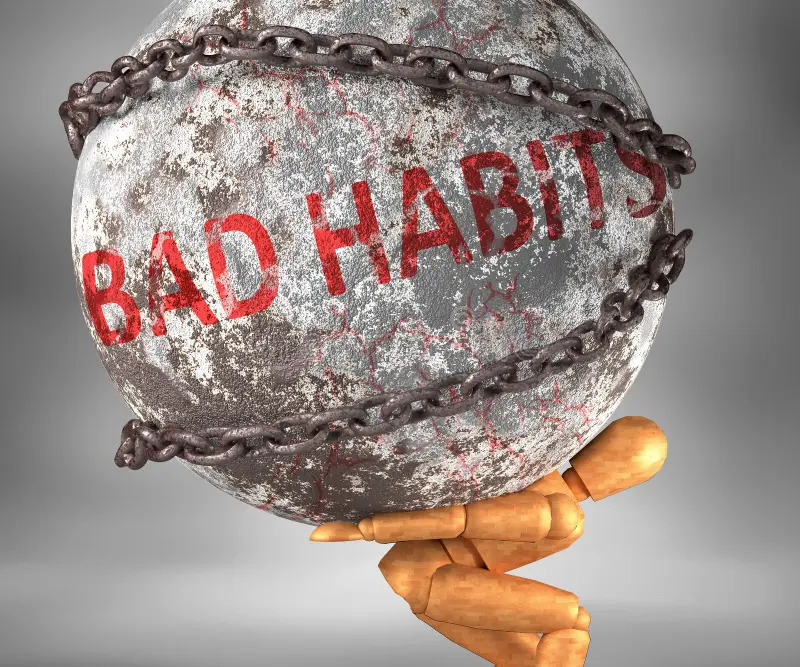
How To Change Bad Habits And Unwanted Reactions, Effectively!
We all have experienced habits of some kind, from physical ones like twitches or tapping the nose when thinking, to emotional responses or comfort eating, and chemical addictions like smoking, drinking and drug abuse, and as everyone knows, some are harder to break than others.
Habits are formed by regular repetition of specific behaviours until they become automatic and executed by our ‘limbic brain’ as an unconscious activity. Formation can be a slow process, typically of approximately between 38 and 66 days for one to become an unconscious behaviour, but can be established as quickly as 18 days or as slowly as 254 days.
Serendipitously, I was on a trip to Florence just prior to the COVID outbreak, when I came across a group of young people looking for signatures and sponsorship for their work fighting against drugs in the country, up by the Plaza Michelangelo.
They represented ‘Communita Lautari’, a facility for education and rehabilitation, and ultimately social re-integration, of dependent people, through a therapeutic programme run by a team of psychologists, doctors, psychiatrists, educators, community operators, employment counsellors and social workers, all free of charge to the individual and their family.
I only had a short time to talk, and was fascinated by the stories of two of the young men who described their introduction to their psychologists and behavioural coach/therapist as the turning point for them, because it was through them and the sessions exploring the root causes of, but more importantly the neural connections between, trigger events and their reactions of resorting to drugs, that they managed to change their dependence on substances and become ambassadors for the programme to help others like them.
They had been through many options of drug reduction programmes and therapies, but none had worked from the basis of addressing the causes and the links between events and responses, so had ultimately failed to provide a long-term solution.
Their stories reminded me of my own journeys breaking dependencies earlier in my life, including one on medications for manic-depression, achieved with the support of a fantastic psychotherapist, through identifying and breaking the links using awareness, alternative action strategies, and a lot of hard work.
Neuroscience has shown that we create neural pathways in relation to events throughout our life, especially during early development, and continue to do so based on our experiences and learnings, which link the event (trigger) to a responsive behaviour, which ultimately has consequences. When the reaction, or responsive behaviour is based on flawed thinking, the reaction can be less than positive and have consequences which can negatively affect our lives.
Consider the difference between the reaction an extrovert has on getting an invite from friends to a party, versus an introvert, who may have had a bad experience at such an event in early life, who is filled with anxiety and dread at the same invite. The event trigger is identical, but their experiences have been very different and so their reactions are polar opposite. One is excited and one is thinking of ways to say no!
So, what can be done?
Well, with some structured steps, and hard work on identifying the root cause of the flawed or negative thinking, exercises can be created to replace the negative associations with positive outcomes, and if practised over time, can change the feelings of dread into some sense of excitement, assuming of course they actually want to be a more socially inclusive person.
It is this type of approach that CBT and positive re-enforcement exercises use, to help those wanting to break an unwanted habit which they feel is holding them back, and make positive changes to their lives.
These days I deal with many clients who have developed event/reaction habits, using many of the methods I learned through both my own experiences and my training, with significant success, so you should never give up, because breaking your own habits is only as far away as a good life coach with behavioural therapy skills and real life experience, and a lot of trust and hard work, but believe me, and others like the two men I fortuitously met that day who have overcome their own habits and dependencies, when I say it is SO worth it.
During the pandemic restrictions we developed new habits, formed in response to the requirements to keep ourselves safe. Many of these still remain with us, so you might want to think about habits YOU want to break, such as the early signs of an obsessive-compulsive disorder relating to hand cleaning, or the deepening of a technology addiction, and keep things in perspective relating to risk and put away the tech and social media to make your nearest and dearest your social focus. It is far more rewarding to Live in YOUR moment with those around you physically, rather than watch other people's moments online.
Using tools such as behaviour analysis diaries, and situation retrospectives, you can identify the triggers of unwanted reactions and create a plan of replacement-responses, to alter your reaction and thus also change the consequences for the better.